Repair or Replace: When an Above-Ground Pool Wall Is Past Saving
Most wall trouble starts small, and a few checks you can make yourself will tell you which side of the line your pool is on.
October 20, 2026 · 4 min read
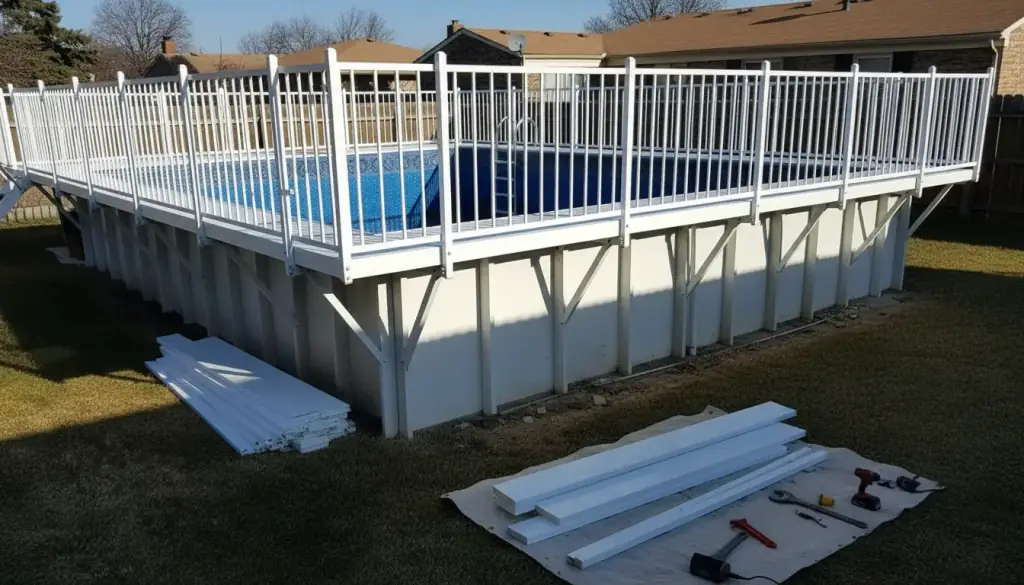
An above-ground pool is a big ring of metal holding thousands of gallons of water, and most of what keeps it standing is the wall. When the wall starts to go, owners usually notice something small first: a rust bloom near the bottom track, a ripple in one panel, a seam that looks different than it did last summer. The question that follows is always the same. Can this be fixed, or is it time to replace the wall? Bob Clement Pool Service has been answering that question for homeowners around Clinton Township and Detroit since 1973, and the answer comes down to a handful of things you can check before anyone shows up.
What the wall does besides look like a wall
The wall holds the water in, but it also holds the shape. The liner is only a vinyl skin with no strength of its own, so the wall carries every pound of water pressure and passes it down to the bottom track and the ground beneath. If the wall bows, the liner stretches over the bulge. If the wall rusts through, the liner has nothing behind it and can push out through the hole. That is why a wall problem is never only a cosmetic problem, even when it starts out looking like one.
Damage that can usually be repaired
Not every blemish means a new wall. What matters is whether the metal underneath is still sound and whether the wall is still straight. A repair makes sense when the damage is local, the rest of the wall is solid, and the wall still stands plumb. Examples that often fall on the repair side:
- Rust that sits on the surface or is limited to one small spot
- A dent or crease in a single panel that hasn't split the metal
- Brackets or fasteners that have loosened but still have good metal to grip
- A short run of damaged top rail or cap that can be swapped out
Signs the wall is past saving
Some damage tells you the problem is the whole wall, not one spot. Look for these:
- Rust-through: holes, soft metal, or flaking that comes off in sheets, especially along the bottom where water sits against the steel
- Bowing: a wall that leans outward or has a belly in it, which means a panel or its support has lost strength
- Damage on several neighboring panels, because the load shifts to the next one and it follows
- Seams that have opened or are pulling apart
- A patch that keeps coming back in the same area
One of these on its own is a warning. Two or more together usually means replacement is the straighter path. A wall that has to be patched every season is telling you something.
Rust-through and bowing are different problems
Rust-through is a material problem. The steel has been eaten away, usually from the outside in, and what's left can't carry the load. Rust tends to start where moisture lingers: the bottom edge, around the skimmer cutout, behind a deck or fence where the wall never dries out. Bowing is a structural problem. It can come from rusted supports, from ground that settled or washed out on one side, or from water pressure finding a weak panel. Bowing can show up even when the metal looks fine, so don't wait for rust before you worry about a wall that isn't straight. A level and a long straightedge will tell you more than your eyes do.
Why the wall itself matters
Walls are not all built the same. Since 1973, Bob Clement Pool Service has specialized in pool wall replacement and has developed its own long lasting half-inch aluminum-faced walls. If you're comparing options from anyone, ask what the wall is made of, how the panels are joined, and what protects the bottom edge, because that's where most walls start to fail.
What an estimate should look at
A fair estimate starts with someone walking the pool, not guessing from a photo. Expect the person to check:
- The condition of the metal along the whole bottom, not only the spot you pointed at
- Whether the wall is still plumb, and still round or square the way it was built
- The ground around and under the pool, since settling causes bowing
- The liner, because a wall job is often the right time to replace a liner that's already tired
- Access for equipment, plus any fence or decking that has to be worked around
Ask for the repair option and the replacement option in plain terms, with what each one fixes and what it doesn't. Bob Clement Pool Service gives free estimates, and the goal is to get the job done right on the first call so you aren't phoning back about the same wall.
A word on waiting
A failing wall doesn't improve over winter. Water, ice and soil movement all work on a weak panel, and a small failure that could have been repaired in spring can turn into a wall that gives way mid-season, with the water going wherever the wall lets it. If you've spotted bowing or rust-through, don't keep topping the pool off and hoping. Stop, take a few photos, and get someone out to look.
If you're not sure which side of the line your wall is on, call Bob Clement Pool Service at (586) 463-2090 for a free estimate. Wall replacement is what the company has specialized in since 1973, and you'll get a straight answer on whether yours needs it.
Bob Clement Pool Service LLC, (586) 463-2090
Call (586) 463-2090More articles
Signs Your Pool Liner Is Failing, and What Replacement Involves
A liner rarely fails all at once, and the owners who catch the early signs get the calmer job.
Owning an Older Wood Pool in Michigan: Restore It or Replace It
A wood pool lives or dies by its frame, and the frame lives or dies by how well it dries out.