Owning an Older Wood Pool in Michigan: Restore It or Replace It
A wood pool lives or dies by its frame, and the frame lives or dies by how well it dries out.
October 20, 2026 · 3 min read
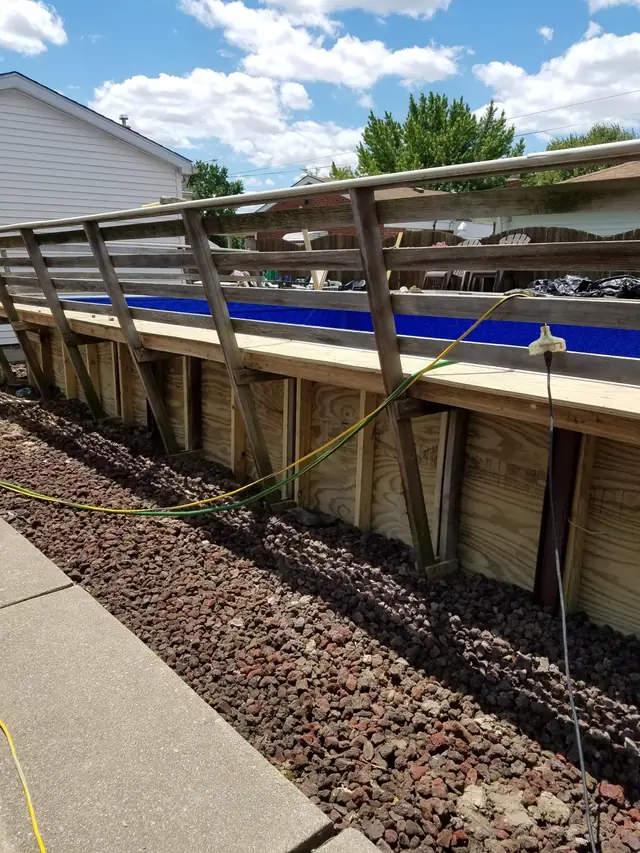
Wood pools have a different feel from the steel and aluminum ones that fill most backyards. Kayak, Hendon, Olympic and Wilkes pools, along with rectangular wood designs, were built around a timber frame, and plenty of them are still in service in Michigan yards. Owning one means knowing what the wood is doing in a climate that freezes, thaws, soaks and bakes all in the same year. Bob Clement Pool Service repairs wood pools and restores older ones around Clinton Township and Detroit, and the same few questions come up every time.
How a wood pool holds together
The wood isn't decoration. In a timber-framed pool, posts, braces and framing members carry the push of the water outward, and the wall fastens to that frame. The liner sits inside and keeps the water in, but the frame keeps the pool in shape. When a wood pool fails, it's rarely the liner that goes first. It's the frame, and the liner gets blamed for what the frame let happen.
Moisture is the real enemy
Wood and water only become a problem when the wood can't dry. Look at the places where moisture hangs around: the bottoms of posts and braces near the ground, joints where water collects, the area behind any deck or fence, and anywhere a leak has been dripping onto framing for a while. Soft, spongy or crumbling wood, dark staining that runs along the grain, and a sour, musty smell all point to rot. A screwdriver pushed into the wood tells you quickly. Solid wood resists. Rotted wood gives.
What Michigan winters do to a wood frame
Freeze and thaw cycles work on every joint. Wet wood swells, freezes, and shrinks again, loosening fasteners and opening gaps year after year. Ice pressing against the wall can push on braces that were already tired. Frost can lift one side of a pool a little more than the other. Heavy snow and a blocked drainage path can leave standing water around the pool come spring. None of this is dramatic in a single winter, but the damage stacks up, which is why the older the pool, the more it pays to look closely each spring.
What to check every season
- Posts and braces: press and probe the wood at ground level and at every joint
- Leaning or bowing: sight along the top of the wall, looking for dips or an outward lean
- Fasteners: look for rust streaks, loose hardware and pulled-out screws or nails
- Wall surface: check for cracks, swelling, and places where the facing has come away from the frame
- The ground around the pool: standing water, washouts and settled spots
- The liner near the wall: wet stains or bulges often point at a wall problem behind them
Take photos from the same spot each year. Slow changes are hard to notice in person and easy to see side by side.
Restoration versus replacement
Restoration makes sense when the frame is mostly sound and the damage is limited: a few braces that need replacing, a section of wall that has gone soft, a liner at the end of its life. In that case, rebuilding the weak parts keeps the pool you already have, in the footprint you already have, with the character of the original. Replacement makes sense when rot has spread through the frame, when the pool has shifted out of square, or when you'd be rebuilding most of the structure anyway. At that point you're paying to restore something that really needs to be redone.
Why specialist experience matters
Plenty of pool companies work mostly on steel pools and aren't comfortable around timber structures. Bob Clement Pool Service lists wood pool repair and the restoration of older pools among its specialties, along with structure repair for both metal and wood pools. Wall replacement has been the company's focus since 1973, so the wall is usually where the conversation starts.
What to expect from an estimate
A useful estimate for a wood pool separates what's rotted from what's merely weathered, says which parts can stay, and lays out what restoration would look like next to replacement. Because every yard is different, you should get a detailed diagnosis of the pool's features and the work it actually needs, not a one-size answer. That also means telling you plainly when a pool is worth restoring and when it isn't.
If you own a Kayak, Hendon, Olympic, Wilkes or any rectangular wood pool and you're not sure what shape the frame is in, call Bob Clement Pool Service at (586) 463-2090 for a free estimate.
Bob Clement Pool Service LLC, (586) 463-2090
Call (586) 463-2090More articles
Repair or Replace: When an Above-Ground Pool Wall Is Past Saving
Most wall trouble starts small, and a few checks you can make yourself will tell you which side of the line your pool is on.
Signs Your Pool Liner Is Failing, and What Replacement Involves
A liner rarely fails all at once, and the owners who catch the early signs get the calmer job.